

Foundation for Jewish Camp Appoints Brett Lubarsky as Director of New England Regional Center
Lubarsky to lead FJC’s new regional hub expanding the impact of Jewish camps across New England.
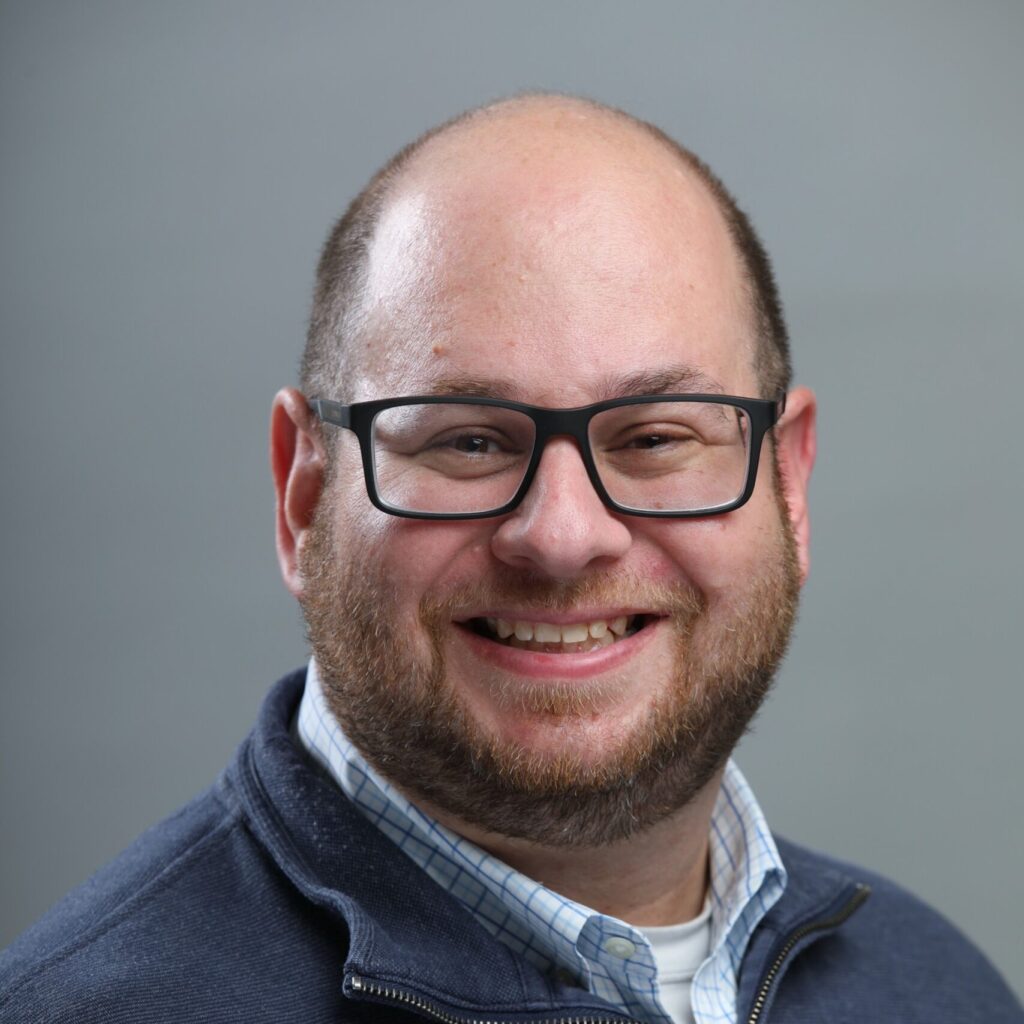
BOSTON — Foundation for Jewish Camp (FJC) announced today that Brett Lubarsky, a veteran Jewish communal professional with over two decades of experience in youth engagement and Jewish camp, has begun his position as the inaugural director of FJC’s New England regional center.
Announced in September by FJC and Combined Jewish Philanthropies, with additional financial support from The Krupp Foundation, the center will work to deepen support for Jewish day and overnight camps across the region; help camps deliver safe, joyful, and meaningful Jewish experiences for thousands of young people; and offer new scholarship opportunities for campers.
“We are incredibly excited to welcome Brett Lubarsky to the FJC team to lead our New England regional center. His roots in the local community and track record of engaging Jewish communities make him the ideal leader for this important role,” said Jamie Simon, CEO of Foundation for Jewish Camp. “Brett’s leadership will be instrumental in increasing the number of Jewish kids going to camp and providing camps with the resources they need to thrive in the flourishing New England region.”
Most recently, Lubarsky served as director of Jewish communal life at Combined Jewish Philanthropies of Greater Boston, where he focused on capacity building, professional development and networking for Jewish communal professionals. He has also previously held leadership positions at the Jewish Teen Initiative of Greater Boston, URJ Eisner Camp, Camp Bauercrest, URJ 6 Points Sci-Tech Academy, Camp Pembroke and the JCC Maccabi Games.
“Jewish camp is one of the most joyful and transformative entry points into Jewish life, shaping identity, belonging, and leadership for generations,” said Brett Lubarsky, Director of the FJC’s New England regional center. “I’m grateful for the opportunity to join Foundation for Jewish Camp and to bring my experience in youth and teen engagement, professional development, and community partnership to this work. I look forward to collaborating with colleagues and community leaders across New England to help strengthen camps, invest in talent, and expand the impact of Jewish camp experiences.”
FJC’s regional model embeds local expertise and relationships to serve camps and communities more effectively. Since launching its first center on the West Coast (Los Angeles) in 2019, FJC has expanded to the Midwest (Chicago) and Southeast (Atlanta), with each center tailored to its local ecosystem but united in convening stakeholders, strengthening staff, providing local funding to camps, offering advisory support, and inspiring families to send their kids to Jewish camp. The New England center is FJC’s fourth, and brings the organization’s approach to the region’s dozens of day and overnight camps.
Lubarsky joins Foundation for Jewish Camp during a period of significant momentum and growth. A record high of nearly 200,000 young people participated in Jewish camp this past summer. FJC is also preparing to roll out its 2026 Strategic Direction, which will detail a roadmap to ensure that every Jewish camp is built to last and that every Jewish child has access to exceptional Jewish camp experiences.
About Foundation for Jewish Camp
Foundation for Jewish Camp grows, supports, and strengthens the Jewish camp movement so camps can deliver exceptional experiences for campers, staff, families, and communities, engaging them in lifelong, joyful Judaism. Learn more at jewishcamp.org.
Foundation for Jewish Camp Report Highlights Rising Engagement & Retention
Annual census of more than 300 camps finds increasing staff retention, strong family satisfaction and tens of thousands of new families
NEW YORK — Foundation for Jewish Camp (FJC) today released 2025 State of the Field Census Part 2: The People We Impact, the second installment of its annual census of Jewish camps across North America. Providing an overview of more than 300 day and overnight camps, the report finds that the Jewish camp field is thriving, with increasing camper and young adult staff retention, high satisfaction of belonging and positive Jewish identity, and tens of thousands of new families choosing Jewish camp for the first time.
“This data tells a powerful story: Jewish camp is gaining momentum, and the people who make it possible — campers, families, and staff — are showing up in record numbers,” said Jamie Simon, CEO of Foundation for Jewish Camp. “At the same time, the Census makes clear that camps need continued investment in staffing and capacity to meet growing demand. FJC is committed to ensuring every camp has the resources it needs and every Jewish child has access to a transformative camp experience.”
The new report complements Census Part 1: The Business of Operating Jewish Camp, released in December 2025, which highlighted record attendance at Jewish camps and expanded financial aid distribution of $47.2 million. Together, the two Census reports by FJC’s Learning and Research Department, offer the most comprehensive picture of the state of Jewish camping in North America. Key findings from Census Part 2 include:
- Growth and Engagement — Nearly three-quarters of overnight camps and day camps plan to increase enrollment for summer 2026. In 2025, overnight camps engaged approximately 15,810 new families and day camps welcomed about 23,770 new families.
- Demand Remains Strong —In 2025, camps reported higher capacity than in 2024, overnight capacity increased modestly by 1% while day camps increased their capacity by 5%, driven by facility upgrades and program expansion. Overnight camps had a combined waitlist of around 2,600 campers and day camps had a combined waitlist of around 2,000 campers, underscoring persistent demand.
- High Satisfaction — Families consistently report that Jewish camp fosters Jewish identity, social skills, confidence, resilience and a sense of belonging. 94% of overnight camp parents and 90% of day camp parents were satisfied with their child’s camp experience.
- Rising Staff Retention — Retention rates among young adult North American staff increased by 22%. Total staff increased in 2025, up 3% at overnight camps and 4% at day camps.
The Census findings come during a period of significant momentum for Jewish camp and FJC. A record high of nearly 200,000 young people participated in Jewish camp last summer. FJC is also preparing to roll out its 2026 Strategic Direction, which will detail a roadmap to ensure that every Jewish camp is built to last and every Jewish child has access to exceptional Jewish camp experiences.
Read the executive summary of Part 1 & Part 2 here.
Read Part 2 of the report here.
About Foundation for Jewish Camp
Foundation for Jewish Camp grows, supports, and strengthens the Jewish camp movement so camps can deliver exceptional experiences for campers, staff, families, and communities, engaging them in lifelong, joyful Judaism. Learn more at jewishcamp.org.
Foundation for Jewish Camp Awards Nearly $1.5 Million to Five Camps for Young Adult Disability Skills Training
Inaugural cohort of the Yashar: Skills Training Initiative will fund new housing, teaching kitchens, and program spaces at Jewish day and overnight camps to expand access for young adults with disabilities
NEW YORK — Foundation for Jewish Camp (FJC) today announced the first cohort of camps selected for the Yashar:Skills Training Initiative, awarding nearly $1.5 million in capital grants to five Jewish camps across North America to engage more young adults with disabilities. The grants, part of a $4.35 million commitment from The Harry and Jeanette Weinberg Foundation, will enable Jewish camps to provide these young adults, who are at higher risk for economic vulnerability, with positive camp experiences and job training opportunities that will increase workforce readiness at camp and beyond.
The announcement comes during Jewish Disability Awareness, Acceptance, and Inclusion Month (JDAIM), observed by Jewish communities each February since 2009 to raise awareness and encourage inclusion.
“Jewish camp should be a place where young people with disabilities feel a true sense of belonging and are actively prepared for the world beyond camp,” said Jamie Simon, CEO of Foundation for Jewish Camp. “This first cohort of the Yashar: Skills Training Initiative represents a significant investment in the infrastructure these camps need to expand their skills training programs, enabling them to prepare more young adults for independence and meaningful work.”
The five camps’ projects include:
- Camp Ramah in New England (Palmer, MA) — Camp Ramah in New England will renovate a former health center into new housing, enabling the camp to hire 14 additional supported staff members who have graduated from its skills training or camper inclusion programs into paid staff roles.
- JCC Camp Chi (Lake Delton, WI) — JCC Camp Chi will construct two new cabins and a multipurpose facility for its Avodah (skills training) program. The program partners with Keshet, a Chicago-based Jewish disabilities inclusion organization, for year-round employment opportunities.
- Roger and Jane Davis JCC Camps at Medford (Medford, NJ) — JCC Camps at Medford will expand its main dining hall to include a full-service teaching kitchen for a culinary arts skills training program to equip participants with transferable job skills.
- Ramah Day Camp in Nyack (Nyack, NY) — Ramah Day Camp in Nyack will renovate dormitory space into housing and program rooms for skills training participants.
- URJ Camp Harlam (Kunkletown, PA) — URJ Camp Harlam will construct a new building to house 18 skills training participants and 10 staff members, with programming spaces, a sensory room, and on-site job training facilities including a kitchen and laundry space.
“Skills training programs provide hands-on learning opportunities for young adults with disabilities to build practical skills, confidence, and independence that extend beyond the camp setting,” said Jill Goldstein Smith, Director of Training & Talent Development at FJC. “Camps in the first cohort of the Yashar: Skills Training Initiative have already built strong programs, and this new funding will enable them to build on that success and allow the Jewish camp movement to learn best practices for reaching more people.”
Approximately 80 percent of Jewish camps now run programs for campers with disabilities — many launched with support from FJC’s original Yashar Initiative, which provided $12.35 million to boost accessibility at 46 camps. A second cohort of this skills training initiative, focused on camps launching new programs, will open applications in fall 2027.
About Foundation for Jewish Camp
Foundation for Jewish Camp grows, supports, and strengthens the Jewish camp movement so the more than 300 Jewish day and overnight camps across North America can deliver exceptional experiences for campers, staff, families, and communities, engaging them in lifelong, joyful Judaism. Learn more at jewishcamp.org
Amid Growth, Foundation for Jewish Camp Names New Chief Impact Officer
Meyer brings more than 20 years of Jewish camping leadership experience as FJC elevates new cohort of senior leaders
NEW YORK — Foundation for Jewish Camp (FJC) announced today that Becca Meyer, a nationally respected leader in Jewish camping with more than 20 years of experience, will serve as the organization’s new Chief Impact Officer beginning in April 2026. Meyer was selected after a highly competitive national search that attracted nearly 500 applicants, and will oversee FJC’s talent and training, grantmaking, data & research, and network engagement & convening teams, with a focus on integration, learning, and impact across these areas.
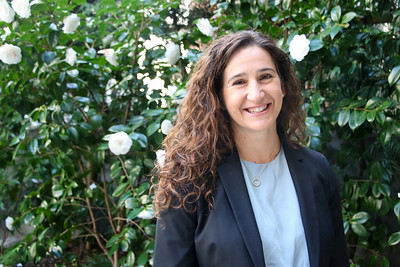
Meyer’s hiring is part of a broader leadership re-alignment to position FJC to implement its upcoming 2026-2030 Strategic Direction. The re-alignment includes hiring of a new Chief Advancement Officer, Matt Freedman, and the elevation of seven senior leaders.
“Becca’s track record of managing complexity, building trust across stakeholders, and translating learning into action will be invaluable to FJC’s work to grow, support, and strengthen the Jewish camp movement,” said Jamie Simon, CEO of Foundation for Jewish Camp. “Like others who have had the privilege to work with Becca, I have long respected her as an exceptionally skilled leader. We are thrilled to welcome her to the team.”
Meyer currently serves as CEO of Camp Tawonga, where she has worked since 2007. Under her leadership, Tawonga boosted employee engagement, closed an $18 million capital campaign, and expanded programming to serve over 1,000 more people each year. Meyer previously worked as Assistant Director at Camp Walt Whitman, and graduated Phi Beta Kappa from Harvard University with a degree in comparative religion.
“In my decades of work in the Jewish camp ecosystem, I’ve seen camp’s enduring power to shape individuals, communities, and Jewish life — as well as the opportunities and challenges camp faces moving forward,” said Becca Meyer, incoming Chief Impact Officer at FJC. “I am honored to join FJC at such a pivotal moment for the field. I look forward to listening, learning, and connecting with camps and movement partners across North America as we work to ensure that every camp can thrive and every child can access these transformative experiences.”
Meyer joins Foundation for Jewish Camp during a period of significant momentum and growth for Jewish camp and FJC. A record high of nearly 200,000 campers and young adult staff participated in Jewish camp this past summer. FJC is also preparing to roll out its 2026-2030 Strategic Direction, which will detail a roadmap to ensure that every Jewish camp is built to last and that every Jewish child has access to exceptional Jewish camp experiences.
Meyer will report directly to CEO Jamie Simon, alongside new Chief Advancement Officer Matt Freedman. As part of a broader leadership realignment, FJC is elevating a talented suite of other leaders from senior directors to vice presidents, as well as naming a new chief of staff:
- Liz Buetow, Vice President, Human Resources, People & Culture
- Julie Finkelstein, Vice President, Training & Talent Development
- Briana Holtzman, Vice President, Network Engagement & Convening
- Rebecca Kahn, Vice President, Grantmaking and Funding
- Matt Levitt, Vice President, Finance & Operations
- Hannah Long, Chief of Staff
- Nila Rosen, Vice President, Learning & Research
About Foundation for Jewish Camp
Foundation for Jewish Camp grows, supports, and strengthens the Jewish camp movement so camps can deliver exceptional experiences for campers, staff, families, and communities, engaging them in lifelong, joyful Judaism. Learn more at jewishcamp.org.
FJC Awards Additional $4.5M to Camps for Capital Expansion
Multi-year initiative made possible by The Gottesman Fund; with some projects already complete
NEW YORK – Foundation for Jewish Camp (FJC) today announced the second round recipients of its Gottesman Capital Expansion Grants, awarding more than $4.5 million to 16 day and overnight camps across North America. The funding is part of a multi-year, $15 million partnership with The Gottesman Fund designed to expand camps’ capacity and address critical infrastructure needs such as camper bunks, staff housing, and program spaces. The new funding brings the total awarded to $8.4 million, enabling camps to welcome more kids and ensuring that Jewish camp remains a top choice among summer opportunities.
“From bunks to program spaces, this new round of funding will enable camps to move quickly to improve the camper and staff experience,” said Jamie Simon, CEO of Foundation for Jewish Camp. “Enrollment at Jewish camps is at a record high and camps urgently need additional capacity and infrastructure to meet demand. We are grateful to The Gottesman Fund for their continued partnership so that camps can build new spaces and continue to deliver transformative experiences for young Jews.”
FJC’s recent 2025 State of the Field Census Part I: The Business of Operating Jewish Camp revealed that enrollment at Jewish summer camp hit an all time high in summer 2025, with camps engaging nearly 200,000 young campers and staff. While serving as a testament to the field’s recovery since the pandemic, high enrollment is stretching camps’ current infrastructure. FJC estimates that at least a quarter of its camps are operating at or near full capacity. Many have plans to increase their ability to serve more young people, and additional support is essential in helping them carry out these plans.
At its biennial Leaders Assembly in December 2024, with a record audience in attendance, FJC announced a $15 million commitment from The Gottesman Fund to help camps build critical infrastructure projects so they can welcome more campers, recruit and retain exceptional staff, and deliver safe, modern, climate‑resilient facilities. Each individual grant can be up to $750,000 and can cover up to 50% of a project’s total cost.
12 camps were awarded a total of $4 million in the first round of funding. One third of these first-round projects are already complete or nearly complete, with the rest anticipated to wrap up by next summer.
16 camps were awarded a total of $4.5 million in the second round of funding. The grantee camps and projects include:
| Grantee Camp | Summer Location | Brief Project Description |
| Camp Avoda | Middleboro, MA | Building a new staff housing unit, renovating cabins and bunks to add staff and camper beds |
| Camp Kadimah | Barss Corner, Nova Scotia | Expanding infirmary to allow camp to host more campers and building new staff housing, opening up staff housing to campers |
| Camp Livingston | Bennington, IN | Renovating staff buildings that will open up cabins for campers |
| Camp Ramah in New England | Palmer, MA | Building a new health center to allow camp to host more campers and hire more staff to serve them |
| Camp Ramah in the Rockies | Sedalia, CO | Building new camper tents and a program space |
| Camp Ruach – SSB JCC | Bridgewater, NJ | Purchase of new land for recreation areas and programmatic spaces. Renovation of existing building |
| Camp Sabra | Rocky Mount, MO | Replacing and expanding camper cabins |
| Camp Stone | Sugar Grove, PA | Building a staff program/flexible space, which will improve staffing that supports recent camper growth |
| Camp Wise | Chardon, OH | Building a new covered outdoor amphitheater and renovations of the dining hall to provide larger space for all-camp gatherings and enable camp fill its existing camper capacity |
| Camp Young Judaea Sprout Lake | Verbank, NY | Construction of two new bunks and Merkaz, camp’s central building |
| Capital Camps & Retreat Center | Waynesboro, PA | Construction of new tents and a bathhouse, upgrades for programming space and infrastructure |
| J Los Angeles | Los Angeles, CA | Renovation of unused space to add multi-purpose room and courtyard to allow camp growth |
| Kings Bay Y Summer Day Camp | Brooklyn, NY | Purchase of portable program spaces, ropes courses, and a track for other program activities to increase programmatic offerings and allow enrollment of additional campers |
| Surprise Lake Camp | Cold Spring, NY | Building four new camper units |
| URJ Camp Kalsman | Arlington, WA | Construction of a new staff summer housing and converting existing staff housing to camper bunks |
| URJ Camp Newman | Vallejo, CA | Construction of a new staff housing unit and opening up existing staff housing to campers |
“These new projects will help camps expand their capacity at a pivotal moment amid record-breaking attendance” said Rebecca Kahn, Vice President of Grantmaking and Funding at FJC. “Our most recent Census confirmed that camps are eager to invest in infrastructure, and we’re proud that Gottesman Capital Expansion Grants are enabling more of them to undertake these critical projects.”
These newly awarded projects are scheduled to be completed before summer 2026 or 2027. Applications for the third round of funding will open later this year after the summer camp session.
About Foundation for Jewish Camp
Foundation for Jewish Camp grows, supports, and strengthens the Jewish camp movement so camps can deliver exceptional experiences for campers, staff, families, and communities, engaging them in lifelong, joyful Judaism. Learn more at jewishcamp.org.
About The Gottesman Fund
Founded in 1965, The Gottesman Fund is managed by members of the Ruth L. and David S. Gottesman family and is dedicated to enhancing and perpetuating Jewish life in the United States, providing significant support to domestic medical, educational, and cultural institutions, and supporting projects in Israel which improve the quality of life for its visitors and residents.
You find your people at camp: New FJC Chair Jeffrey M. Solomon Dreams of Doubling Enrollment
The vice chair of TD Bank U.S. steps into the role of Foundation for Jewish Camp chair after 10 years on the board, succeeding Jim Heeger.
Authored by Jay Deitcher for ejewishphilanthropy.com
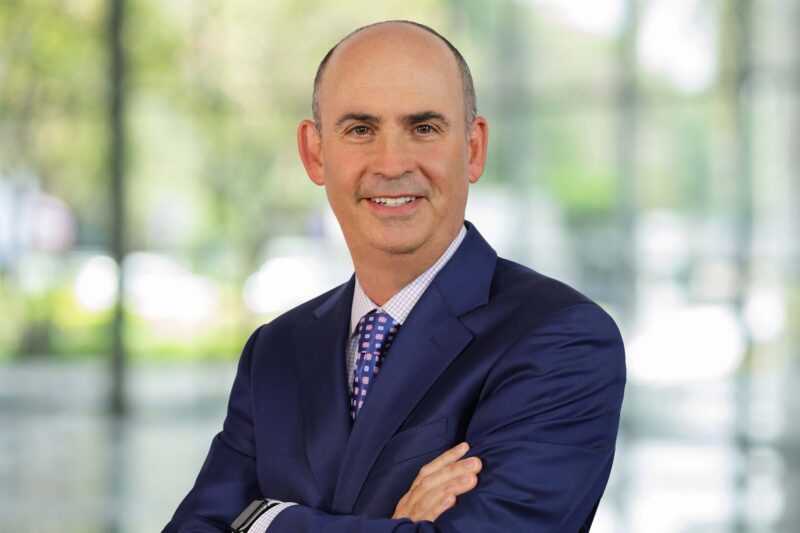
There is a direct connection between Jeffrey M. Solomon, who recently became board chair of Foundation for Jewish Camp, and Central Perk, the iconic coffee shop from the TV show “Friends.” And that link was forged at Jewish summer camp.
The scene opens in Morgantown, W.Va., in the summer of 1976, when a 10-year-old Solomon basked in the magic emanating from the scenery in the Emma Kaufmann overnight camp’s production of “Alice in Wonderland.” The set was created by Burton Morris, a fellow camper who would soon become one of Solomon’s camp friends.
Like many camp friendships, Solomon and Morris’ relationship bloomed beyond the perimeters of the campgrounds: the pals went from competing in color wars to watching each other launch careers — in Morris’ case as a pop artist and in Soloman’s in finance, as the former chair and CEO of the investment bank Cowen and today as special advisor and vice chair of TD Bank U.S.. They stayed in touch as they each got married — for Solomon, to his bashert, whom he also met at camp.
At some point, actor David Schwimmer, who portrayed Ross Geller in “Friends,” also fell in love with Morris’ artwork, leading to his paintings being displayed throughout Central Perk. Morris also drew the fake cafe’ iconic logo, featuring a cup of coffee with a spiral of steam coming out the top. Morris’ Lady Liberty and King Kong pieces were featured in over 100 episodes, forever connecting the long-running sitcom to one of Solomon’s earliest camp memories and favorite friends.
The connection between Solomon, camp and Judaism is forever, too. After attending Emma Kaufmann, he became a counselor and program director, later serving leadership positions in the UJA-Federation of New York, Tree of Life Inc. and Lost Tribe, the Jewish teen social media platform. In 2016, he joined the board of the Foundation for Jewish Camp and became board chair in January, a term that runs through 2029.
At a time when the Jewish world yearns for “Jewish joy,” this is “the moment” to turn to camp, Solomon (not to be confused with Andrea and Charles Bronfman Philanthropies’ Jeffrey R. Solomon) told eJewishPhilanthropy.
“You find your people at camp,” he said, sitting in front of a painting of a coffee cup by his camp friend Morris that hangs in his home office in Boca Raton, Fla.
Last summer, the Foundation of Jewish Camp set a record high of nearly 200,000 children and staff in attendance at its 168 affiliated day camps and 161 overnight camps, surpassing pre-pandemic levels. Solomon spoke with eJP about how camping has changed since the 1970s, cultivating Jewish community when everyone disagrees and pondering a world where the pandemic destroyed camp.
The interview has been edited for length and clarity.
Jay Deitcher: How has camp changed since you went as a child?
Jeffrey M. Solomon: First of all, the world is a lot more connected than it used to be, and so where do you go to find refuge from that connectivity? How do you build human interaction in an intense environment when most human interaction happens digitally? Camp is one of those things we need as individuals to really establish the foundation for human interaction.
There are a lot of great values that get espoused at Jewish camp, like tikkun olam and empathy, foundational Jewish human values, and camp allows young people to experience that outside of the digital experiences they’re having.
There are just many more challenges associated with adjusting in the world as a youngster than there were when I was a teenager. There [are] many more mental health issues that camps are having to deal with because of the way the world has evolved. It just wasn’t a thing that we ever talked about [when I went to camp]. But now we do, and we have programs at Foundation for Jewish Camp that allow for camp professionals and the seasonal staff we hire to recognize and manage and help with mental health issues.
JD: There were people for whom camp just didn’t click with in the past, possibly for reasons based around mental health. I wonder if some of the growth that we’ve seen in recent years has to do with the greater awareness of mental health.
SM: We talk about things now in our world, like inclusion, that we didn’t talk about. We always wanted camp to be a place where everybody could be their authentic selves, but we didn’t have the words for that when I was in camp 50 years ago.
What we’re doing to camp is reacting to the reality that we share things in common, but we’re all different individuals, and how do we intentionally blend our individuality into a collective so that we have a shared experience, but we maintain our individual identities?
You’re different than your bunk mates, but you all have to learn how to live together, and you’re going to do it 24 hours a day, seven days a week, for extended periods of time. And it’s fun. It’s not that there aren’t disagreements in cabins and there aren’t challenges, but camp is where you learn how to work that out.
When I started camp, I was a very homesick camper. I cried, and then when I got adjusted and figured out how to have fun, I forgot about the fact that I missed home. I’m still not good with transitions, but I inherently know that after a couple of days, I’m gonna be fine. [Without camp,] I would never have had the courage to leave Pittsburgh, where I grew up, and move to New York and make a life.
JD: What are you excited about as you start your term?
SM: When I first joined the board 10 years ago, we were still finding our way. We did a lot around affordability. We had a big program called “One Happy Camper,” which we still have, that provides scholarship money so that every Jewish child who wants to go to camp can go to camp. But over the last 10 years, with great leadership from our previous chairs and our previous CEO, we’ve moved beyond that.
After the post-Oct. 7 “Surge” of Jewish identity and revival, families are looking for ways to ensure that their children are having positive Jewish experiences, that there are safe spaces for them to be authentically Jewish without recrimination or without people questioning it. What I’m most excited about is extending that and making it available to more children. Every summer, we have about 200,000 campers and staff members between day camps and overnight camps. What would need to be true for that to be 400,000 or 500,000?
We’ve got this brand-new five-year plan that we spent a year working on. How can we help camps to run more efficiently, so that they can be more affordable? How do we build capacity? If we had 200,000 people show up tomorrow and say they want to be at camp, we don’t have places for them, so how do we think about capacity building that enables every Jewish child who wants to go to Jewish camp [to] be able to go to Jewish camp?
JD: Say you do end up with 400,000 people wanting to attend camp next year. How do you logistically manage that without getting overwhelmed?
SM: There were some very specific conversations that we’re having with funders about programs that we can be doing to build capacity and help make camp more affordable. If you think about the philanthropic dollars that go specifically towards camping, it’s still small relative to a lot of other initiatives that we have.
Foundation for Jewish Camp is filled with data sets that allow funders to see how their dollars are going to work towards outcomes. [FJC was founded in 1998, and] that’s something that you can only have when you’re 25 years old. Here’s an example. Ninety-seven percent of parents said that their camp fostered a sense of safety and belonging as a Jewish individual last summer. Ninety-eight percent of parents reported that their camp did a great job of creating an inclusive and protective space, free from antisemitism. I’ve been around data sets for a long time, when we think about how we attract philanthropic dollars, I just don’t think there are very many things where you can say with absolute certainty, if you invest here, these are your outcomes.
JD: Post-Oct. 7, there was a feeling that Jews needed to be united, but then, as we moved away from Oct. 7 and the war in Gaza raged on, I think there’s been some division within our community. Zionism began being defined differently by different people, so did antisemitism. While you’re trying to create this Jewish identity at camp, how do you open yourself to people who might define these terms differently and see being Jewish in different ways?
SM: I’ll share with you something I shared in my first board meeting with our board members. I did a dvar Torah, [about] parshat Shemot. In parshat Shemot, Moses tells God [five] times that he doesn’t want to be the leader of the Israelites, and some of [the reasons] were personal, because he didn’t speak well, he didn’t think he was qualified to be a leader. But some of them were like, these people, they argue and don’t get along with each other.
This is the narrative of our people in our oldest scripture, so here we are, the same people that we were. Our job as Jews is to foster a sense of inclusion and belonging, regardless of how you feel on the issues that face us in this moment. We need institutions that have an open-tent policy. It doesn’t mean we all have to agree, but we do believe, at the end of the day, that we have a right to exist as Jews and practice our religion as we want. Camp is a place where that happens.
By the way, if you don’t like what happens at [one] Jewish camp, find another Jewish camp. There are hundreds of them. We’re not telling the camps how they should be Jewish. We do have some things around whether you recognize Israel’s right to exist. That is not something we’re going to debate. But other than that, how she exists, what she does, we can argue about it as long as you want. But while we’re having these immersive experiences Jewishly, we’re also having fun, enjoying each other, learning how to function as a people.
JD: No longer are camps simply confined to summer camp. Camps are coming up with new ways to get revenue. They have parents’ weekends where parents go and take advantage of the campsites. How far can a camp stretch?
SM: If you could have camp in your life 365 days a year, who wouldn’t vote for that? When we get down to the business of Jewish camp, if you can generate business revenue in the off-season, then it makes your camp more sustainable and probably more affordable. The more revenue you can generate away from the eight weeks in the summer where you’re doing your primary job, the more you can offer scholarship dollars, the more you can defray your fixed costs associated with things, so it is important as part of the business of camp to be trying to think of other ways to generate revenue that isn’t camping revenue.
How far can it go? I don’t know. A big function that we perform at Foundation for Jewish Camp is [sharing ideas] that’s [working at one camp with other camps]. A couple of decades ago, people weren’t thinking about winterizing camps. Not every camp will do that, but a bunch of them could do that because it will enhance their sustainability. People go to cold places all the time for retreats that aren’t camp. Well, how could we be thinking about that?
JD: Anything else you want to add?
SM: It’s a team sport. My ascension to this role only happened because of the great leadership of people like [past chair] Julie Platt and [immediate past chair] Jim Heeger. These are legendary Jewish leaders, and I feel a sense of meaningful responsibility to ensure that I am carrying forward their legacy.
[Without FJC founders] Rob and Elisa Bildner, there wouldn’t be a Foundation for Jewish Camp. They had the vision 25 years ago that this was an unmet need. What if they hadn’t done that? I said this to them the other day, ‘If you hadn’t done that in the year 2000, when 2020 came around, and there was a pandemic, there wouldn’t be camp.’ I keep coming back to that, what does a world look like where there’s no Jewish camp? I don’t know what we would have done.