

Camps set record attendance last summer, Foundation for Jewish Camp census finds
Authored by Jay Deitcher for ejewishphilanthropy.com
With the cost of living rising ever higher in America, so too is the price of summer camp. Despite this, a record number of children attended camp this year, according to a new census released by the Foundation for Jewish Camp. The study found that this was, in part, made possible by $47.2 million in financial aid, allowing tens of thousands of children to attend camp who otherwise would not have been able to.
“At a time of upheaval, when there’s a lot of unknown and a lot of fear, camps are building a better world, one community and one person at a time,” Jamie Simon, CEO of Foundation for Jewish Camp, told eJewishPhilanthropy. “Camp is promoting Jewish identity, Jewish leadership and Jewish community, and that is really what people are craving. It is a safe place to be prideful and joyful about your Jewish identity.”
The report, titled “2025 State of the Field Census Part I: The Business of Operating Jewish Camp,” shows that attendance at FJC’s network of 168 day camps and 161 overnight camps increased 5% since last year to nearly 200,000 children and staff, setting a new all-time record, 9% over the 2019 pre-pandemic rate. The census, which was released last Thursday, focused on the business aspects of Jewish camping, with the second part of the report due to be released in February, exploring demographics, enrollment patterns, camp capacity, seasonal staff compensation and the impact of camp on campers and staff.
Rising costs remain the top concern for both overnight and day camps, with this year’s expenses increasing 5% over last year’s. Everything has ratcheted in price, including staffing, security and food. “Things are expensive, and so running a camp is no exception,” Simon said, adding that camps “worked tirelessly to keep tuition relatively stable, even as the broader economy drives up operating costs.”
Partially because of these rising costs, families requested more than $58 million in financial aid, with camps distributing $47.2 million — $33.5 million for overnight camps and $13.7 million for day camps — a more than $7 million increase from the year before. The financial aid was provided by the camps themselves, local federations, philanthropic partners and FJC. Without the assistance, 37% of families said they could not have afforded camp, according to the census.
Next year marks the twentieth anniversary of FJC’s One Happy Camper initiative, which aims to attract new campers by offering $1,500 grants for their first and second years at camp. The grants are provided regardless of need and can be paired with other forms of financial aid. Since launching, FJC has provided over 130,000 OHC grants.
With a growing number of campers, camps need to increase their capacity — adding beds, staff housing and other infrastructure. In the past five years, 53% of overnight and 21% of day camps have completed new buildings or refurbished old ones, and in the next five years, 58% of overnight and 36% of day camps hope to complete capital projects, the survey found. To stay competitive, camps are also improving their swimming pools, art centers, outdoor amphitheaters and synagogues.
Many of these projects were supported by the Gottesman Fund, which awarded $15 million last December to FJC — the largest grant it has ever received — to help the more than 300 Jewish summer camps expand their capacity and modernize their facilities. Some campgrounds have not been updated since the 1950s.
“Ensuring that these infrastructures are updated so they can exist for another 50, 100 years is really critical,” Simon said. “One camp told me that because of the Gottesman grant, [camps] are going to be able to serve 100 more kids this summer, and so in 10 years, that’s over 1000 kids.”
Even with the increased costs of running camp and with investments in improving facilities, camp revenue increased 6% over last year. One way camps are generating revenue is through off-season programming, with 65% of overnight camps and 62% of day camps offering programming across the calendar and nearly half of overnight camps and over half of day camps hoping to expand their year-round programming.
Year-round program not only allows camps to spread “the magic of camp beyond the summer,” Simon said, it also allows camps new ways to increase revenue by offering programming on weekends, breaks and after school.
The most popular year-round programming remains family camp, allowing babies and toddlers to experience camp alongside older siblings, parents and grandparents. “You can get people connected to the Jewish community from a young age and become lifelong campers,” Simon said. In addition, camps are offering bar and bat mitzvah programming, after-school programs, men and women’s retreats, young adult weekends and Israel/Palestine dialogue sessions.
Post-Oct. 7, camp remains space for hope, Simon said. “When one kid goes to Jewish camp, they are going to live a Jewish life. When hundreds of thousands of young people are going to Jewish camp, they’re building the Jewish future, and our Jewish future is bright.”
Foundation for Jewish Camp Welcomes Matt Freedman as Chief Advancement Officer
Freedman brings extensive philanthropic leadership experience to FJC
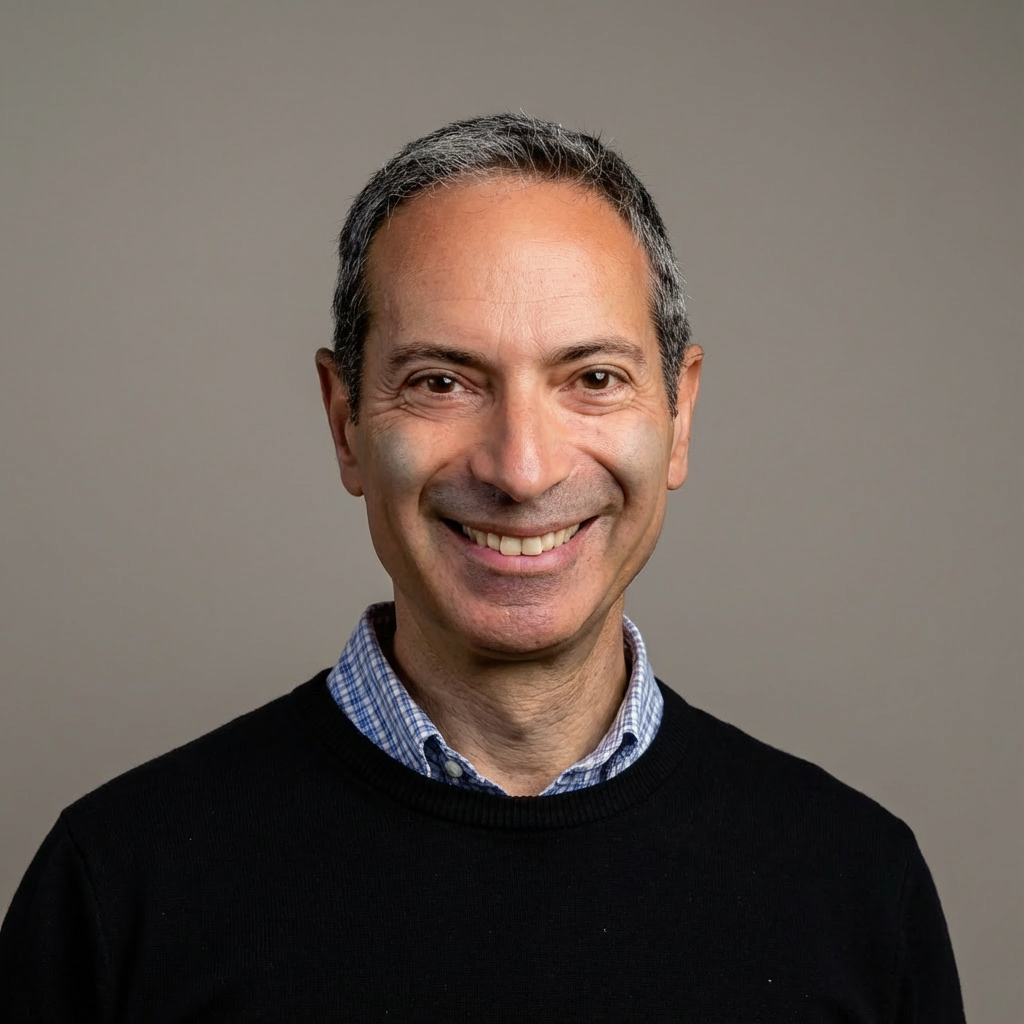
NEW YORK — Foundation for Jewish Camp (FJC) announced today that Matt Freedman, who has more than three decades of philanthropic experience, will serve as the organization’s new Chief Advancement Officer beginning in January 2026. Freedman was selected after a competitive, nationwide search and will lead the strategic direction and execution of all FJC philanthropic and marketing initiatives.
“Matt is a thoughtful, smart, and grounded leader whose deep expertise in fundraising strategy, donor relations, and organizational advancement will be a tremendous asset to our work,” said Jamie Simon, CEO of Foundation for Jewish Camp. “We are thrilled to welcome Matt to the team as FJC works to grow, support, and strengthen the Jewish camp movement.”
Most recently, Freedman served as the Chief Development Officer at The Y in Central Maryland, where he was responsible for all philanthropic activity for the organization. He has also previously held leadership positions at The Jewish Federations of North America and The Associated: Jewish Federation of Baltimore. At FJC, Freedman will oversee FJC’s fundraising and marketing teams, with a focus on major gifts, institutional giving, and expanding the organization’s reach.
Freedman joins Foundation for Jewish Camp during a period of significant momentum and growth. A record high of nearly 200,000 young people participated in Jewish camp this past summer. FJC is also preparing to roll out its 2026 Strategic Vision, which will detail a roadmap to ensure that every Jewish camp is built to last and every Jewish child has access to exceptional Jewish camp experiences.
“As a parent and as a communal professional, I have seen up close how camp transforms the lives of young people,” said Matt Freedman, FJC’s incoming Chief Advancement Officer. “At a moment when Jewish identity, especially for young people, can feel scary and complicated, I am grateful for this opportunity to return to Jewish communal service specifically in support of Jewish camp, which creates joy and builds resilience. I believe Jewish camp is central to the Jewish future and it is a privilege to join the FJC team.”
Freedman will continue to be based in Baltimore and officially begin his role on January 5, 2026.
About Foundation for Jewish Camp
Foundation for Jewish Camp grows, supports, and strengthens the Jewish camp movement so camps can deliver exceptional experiences for campers, staff, families, and communities, engaging them in lifelong, joyful Judaism. Learn more at jewishcamp.org.
Foundation for Jewish Camp Census Highlights Record-Breaking Attendance and Field-Wide Mobilization to Meet Rising Financial Needs
New report shows nearly 200,000 young Jews participated in summer 2025 and a narrowing gap between financial aid requests and distribution
NEW YORK — Foundation for Jewish Camp (FJC) today released the findings of 2025 State of the Field Census Part I: The Business of Operating Jewish Camp, highlighting record attendance at Jewish camps this past summer as well as field-wide mobilization to boost financial aid and renovate camp infrastructure. Jewish camps engaged nearly 200,000 young campers and staff in summer 2025 — a 5% increase over the previous year and all-time record. The report also details expanded financial aid distribution of $47.2 million, as FJC, camps, and community partners work to narrow the gap between requested and distributed aid.
“More young Jews are participating in Jewish camp than ever before, which means a record number of young Jews are connecting to their Jewish identity, building leadership skills, and having fun,” said Jamie Simon, CEO of Foundation for Jewish Camp. “Amid rising operating costs, increased financial need, and aging infrastructure, FJC is stepping up to provide families and camps with critical support so that every Jewish child can access the transformative experience of Jewish camp.”
The report’s key findings include:
- Increased Participation — 198,730 campers and young adult staff participated in Jewish camps across FJC’s network of 168 day camps and 161 overnight camps. This all-time record is nearly 9% higher than 2019’s pre-pandemic high, and nearly 30% higher than 2021, the first year camps moved to resume operations after COVID.
- Camps Expand Aid Amid Rising Requests — In 2025, families requested $56 million in financial aid, partly driven by higher camp operating costs. At the same time, camps increased aid distribution to $47.2 million, narrowing the gap between requested and distributed aid. 37% of families who receive direct tuition aid say they would be unlikely to attend camp without it.
- Investment in Facilities and Year-Round Engagement — Most overnight camps and more than a fifth of day camps have completed new buildings or renovated existing ones in the past five years. Even more are planning upcoming projects. As camps look to modernize infrastructure, many are also seeking to expand offerings outside of summer. Nearly half of overnight camps (49%) and over half of day camps (58%) are interested in providing additional programmatic and retreat offerings to engage campers, families, alumni, and communities throughout the year.
FJC continues to support camps, campers and staff, and families with resources that expand access to and improve the quality of Jewish camps. FJC’s signature One Happy Camper® (OHC) program provides incentive grants of up to $1,500 to help camps attract new campers and increase camper enrollment, with over 130,000 OHC need-blind grants distributed since the program’s inception. FJC’s $15 million Capital Expansion initiative in partnership with The Gottesman Fund, announced last year, is providing funding for critical infrastructure upgrades to staff housing, program spaces, and camper banks.
Part I of FJC’s annual Census, released today, focuses on the business of camp. The second part of the Census, coming in February, will dive deeper into camper and staff demographics, enrollment patterns, camp capacity, seasonal staff compensation, and the impact of camp on campers and staff. Together, these data points serve as the foundation for FJC’s 2026 Strategic Vision, which will detail a roadmap to ensure that every Jewish camp is built to last and every Jewish child has access to exceptional Jewish camp experiences.
Read the full report here: https://jewishcamp.org/census2025
About Foundation for Jewish Camp
Foundation for Jewish Camp grows, supports, and strengthens the Jewish camp movement so camps can deliver exceptional experiences for campers, staff, families, and communities, engaging them in lifelong, joyful Judaism. Learn more at jewishcamp.org.
New Research Confirms Jewish Camp is the #1 Shared Experience Among Jewish Communal Leaders
Data underscores camp as a primary engine for Jewish talent pipeline
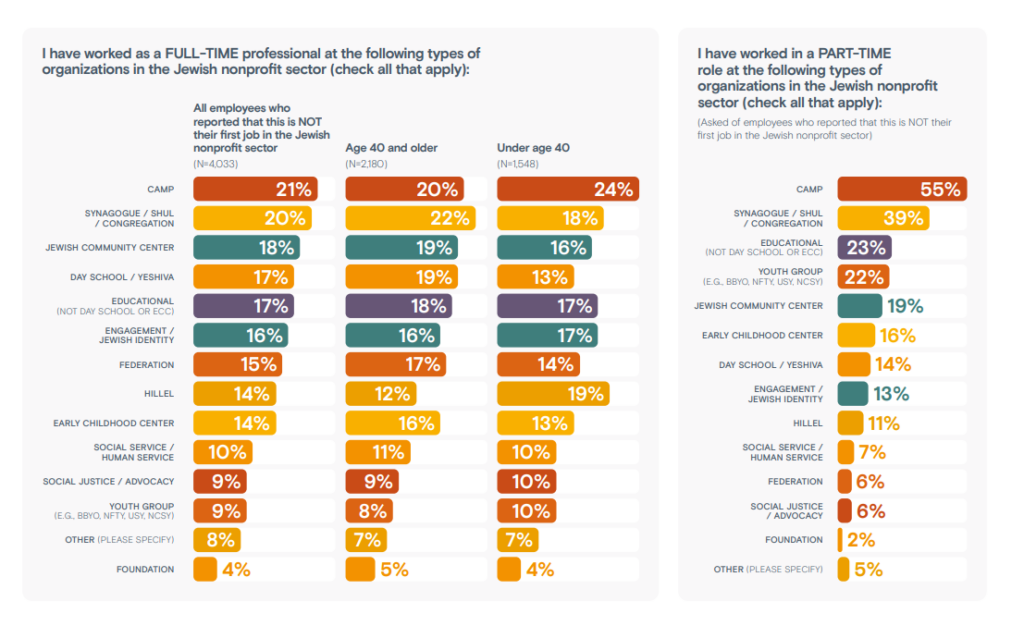
NEW YORK — Foundation for Jewish Camp today highlighted new findings from Leading Edge’s State of Jewish Nonprofit Talent: 2025 report, identifying Jewish camp as the number one shared experience among Jewish communal professionals. The report underscores camp’s role as an incubator for talent and a foundational entry point in the Jewish leadership pipeline.
“This new data from Leading Edge confirms the path to Jewish leadership often begins in the bunk. I’m living proof of this impact, having journeyed from camper to counselor to Jewish communal leadership,” said Jamie Simon, CEO of Foundation for Jewish Camp. “If camp is the birthplace of our future leaders, then investing in camp is one of the most effective ways to ensure a vibrant, sustainable future for the entire Jewish community.”
“Jewish camp is an early and powerful touchpoint for future Jewish communal professionals,” said Gali Cooks, President & CEO of Leading Edge. “Our data shows Jewish camp is one of the most consistent experiences shared by professionals in our field today. The task now is to grow that impact by leveraging camp and other Jewish community experiences even more to build talent excellence across the sector.”
The report reveals that two thirds of Jewish employees in the nonprofit sector participated in Jewish summer camp and comes amid a surge of young adult engagement in camp. This past summer, nearly 39,000 young adult staff worked at Jewish summer camps. FJC is actively nurturing this Jewish talent pipeline through funding and professional development programs designed to support leaders at every stage of their career.
FJC’s Cornerstone Fellowship has trained over 6,000 senior counselors, empowering them to bring meaningful Jewish content to their campers and gain skills they take back to their college campuses and home communities. FJC also offers the Yitro Leadership Program, a strategic investment in cohort-based professional development experiences for camp leadership in middle management roles, and the Camp Management Fellowship, which brings high quality and timely training to seasonal camp supervisors.
FJC’s investment in young leaders ensures they view Jewish communal work as a viable and inspiring career path and helps them develop critical competencies such as facilitating difficult conversations and building resilient communities. Data from FJC’s Character at Camp initiative, funded by the John Templeton Foundation, suggests that Jewish camp nurtures a sense of leadership and communal responsibility as part of camp culture, helping campers and staff be active leaders in creating and sustaining values-led communities.
About Foundation for Jewish Camp
FJC’s mission is to grow, support, and strengthen the Jewish camp movement, leveraging more than $20 million of philanthropic giving annually to scale programs and resources that benefit more than 300 Jewish day and overnight camps across North America. Learn more at jewishcamp.org.
About Leading Edge
Leading Edge mobilizes Jewish organizations to become places where great people deliver great impact. Learn more at leadingedge.org.